

FTL
Scientists were in denial about the reality of faster-than-light travel. A humble mathematician from a scorching desert planet challenged their assumptions.

The Anomaly
Scientists, historians, and philosophers of The Bary were long troubled by the paradox of humanity's interstellar existence. All theoretical and laboratory evidence strongly supported the conclusion that faster-than-light transmission of matter or information of any kind is impossible. Yet, when Novani, Sibylean, Geminese, and Feronian scientists began exploring the dark skies, not only did they find each other, they found the scattered debris of ancient starships everywhere.
Because of common design characteristics, tailored accessibility, and familiar but ancient script, it was easy to conclude these were the remains of The Bary’s past. The prevailing theory was that such high-tech detritus—each piece amassing at least several kilotons and impressive constructions in their own right—were the remains of colony ships capable of reaching relativistic speeds. Considerable interest grew among the Barystates in re-discovering and harnessing whatever awesome powers could move an estimated several hundred megatons of mass to a significant fraction of the speed of light. But the only cleanly severed pieces of megastructure were in Empyrean hands. Barystates made substantial diplomatic efforts to convince The Hold to open its doors beyond the singular cosmic megacity of Port Angelice. Until recently, the Empyreans stubbornly refused.
The Anomaly seems to have changed their calculus. In 79 CY, a clandestine expedition of ancient flotsam was conducted by Cheon-Meyer Industries with the tacit support of the Feronian government. They never returned. Whatever they found seems to have touched off something both wonderful and terrifying.
It would be a luminous event seen across The Bary and spuriously referred to since as The Detonation, a supernova-like explosion in the sky. In the wake of what can pithily be described as a gravito-electromagnetic surge seen across The Bary, an anomalous network of topological solitons grew outward from the epicenter, engulfing the whole star system at the speed of light. This mesh of aberrant spacetime continued to grow radially from its origin point, not unlike stress fractures in ice or glass. The Anomaly’s growth has continued unabated from its “detonation point,” and should that continue to be the case, it will permeate The Bary’s home galaxy 80,000 standard years from now.
For several years soon after, governments and their top scientists kept the nature of these disturbances secret. Such confidentiality may have been warranted: no one was sure what had just transpired.
But with so many strange electromagnetic disruptions reported across The Bary, the effects on civilization were visible to the naked eye. By not releasing what little information they possessed, the Barystates manufactured something of an astropolitical quagmire of public opinion. Conspiracy theories surfaced about The Hold’s direct responsibility for the tragedies caused by this sudden severe space weather. Several large vessels went missing during their regular interplanetary transits, their crews disappeared and presumed dead. One such vessel, the Lightfoot, was found sundered upon the moon of Cheviot in the Nova system.
Soon there were catastrophic theories being floated not just by charlatans but by astrophysicists, with one such frightening example being a plausible hypothesis that The Anomaly was evidence of a false vacuum decay: the verge of a fundamental rewrite of the very laws of nature that would exterminate all things. Some scientists refloated the Big Rip scenario of cosmological eschatology, while others conjectured that the force of gravity itself was breaking down. The hysteria was fueled further when the first wave of probes sent to The Anomaly’s epicenter were lost, and subsequent reinforced probes behaved in strange and unexpected ways that defied the known laws of physics.
Varied private interests across The Bary were less scrupulous about studying this new abyss, and Feronian and Novani corporations sent swarms of their own autonomous micro-craft. After examining the mass of data acquired by her employer at several points along The Anomaly, the Sebeki mathematician Isabelle Fahrid went public with her own findings. Damn the corporate confidentiality agreements! Fahrid’s result was so profound and her analysis so confident that no one would dare discipline her; and she was right.
Fahrid had rendered the noisy data returns into a beautiful but unconventional mathematical function expressing a unique metric tensor. In 90 CY, she published her breakthrough paper, Exploring Anomalous Spacetime Manifolds. It was the first self-consistent description of superluminal translation in known history. In her celebrated thesis, Fahrid described the solitons as a dilation of primordial cosmic strings newly existing in a novel and latent metastable configuration. She hypothesized that such a runaway effect may be induced by a sudden phase change: perhaps the enthalpy of The Anomaly.
While this didn’t quite solve the question of how The Detonation event occurred or how The Anomaly came to be, it explained what it left in its wake. Fahrid called these structures “Lambda lines” after the mathematical parameter used to denote the cosmological constant associated with dark energy. She conjectured that symmetry breaking and the changing energy of the vacuum itself played a role in their development. They are also sometimes called “Fahrid filaments” in her honor, another alliteration preferred by some voidfarers, particularly other Sebeki. The now colloquial term for any of these structures used to travel great distances across the void is hyperlane.
In layman’s terms, hyperlanes can be thought of as moving walkways or travelators through space. They change the viscosity of spacetime at their borders, allowing for a puncture to be made at the anemic energies achievable by human technology. Subsequently accessed by regular matter, a hyperlane bears mathematical similarities to wormhole topology. But in a hyperlane, ancillary flows are allowed. The lane can be accessed or exited at any point, with some special engineering considerations.
Hyperlane Properties
Hyperlanes exist physically as tubular structures in normal space. They have a gigantic but specific amount of negative energy, and they lose this energy when a ship enters and exits the walls of the tube-like soliton. Lanes shrivel and disappear once used up, ejecting any positive mass-energy within with the momentum it had when it entered. New lanes are forming all the time, often not far (astrophysically speaking) from old ones. The filaments of metastable spacetime are particularly attracted to massive gravitational sources at either end, but they do not directly intersect celestial bodies, and are only found in asymptotically flat space. Their terminus will appear closer to a rocky planet than to a gas giant, a gas giant than a star, and so on.
Not long after Fahrid’s paper, the hyperspace module was invented by several companies near-simultaneously. The hyperspace module’s job is solely to punch through a dangerous topological boundary with brute force. Safe navigation into and out of a hyperlane requires specially tuned erudium rods acting as gravito-electromagnetic capacitors. These rods are embedded in a thin coat of superfluid helium-3. By applying enough current to the rods, the module can generate a brush discharge over several adjacent quantum fields, punching a hole through an otherwise hazardous set of GEM boundary conditions that would shred a vessel. The module must be energetic enough to create a tear with enough surface area for the ship to pass through as it enters and exits a lane, a set of parameters which has only been found through catastrophic trial and error. By manufacturer agreement and interstellar law, generated hyperspace apertures must be at least 50% wider than that of the vessel creating them, with a 100% wider window preferred.
The vacuum energies involved in hyperlane physics differ from those of the surrounding universe. In classical relativistic physics, velocities do not add; rapidities do. Exponentially more energy is needed to accelerate a gram of mass closer to the speed of light. Inside a hyperlane, it is theorized that this curve is roughly mirrored relative to the known universe. More mass will bring a normal object within a lane down from higher superluminal speeds and closer to the speed of light.
If one could see the matter traversing a hyperlane from the outside, the energy wake would look similar to that of a tachyon. Tachyons are hypothetical particles that exhibit exactly this unusual property of increasing in superluminal speed as their energy decreases, requiring infinite energy to slow to the speed of light. The discovery of another plane of spacetime embedded within or entwined with our own has renewed the search for these particles. They may have been present at the very beginning of The Anomaly, during The Detonation.
The superluminal speed that is achievable through a hyperlane is therefore inversely proportional to a voidcraft’s total mass; including crew and cargo. The smallest manned vehicle may zoom from one end of The Bary to the other at velocities exceeding 10,000 c. More massive ships have slower average speeds, approaching the speed of light asymptotically. The largest freighters, carriers, and battleships achieve about 3 c. A small yacht or strike craft can travel across settled space in an hour. A trader can head down the same lane in a week or two, whereas previous journeys were planned well in advance and took up to a decade. Engaging sublight propulsion within the aberrant space has no effect on the speed of passage from without. Only the injection variables of mass and vector in normal space determine this.
Calculating a hyperspace trajectory is done entirely through dead reckoning based on the mass and entry direction of the traversing vessel. Such a calculation cannot take into account the movement of the lanes themselves through normal space, much like early sailors could not integrate ocean currents or wind gusts into their estimations.
The interior structure of a hyperlane is poorly understood. It shares mathematical dualities with the exterior, but that fact surprisingly hasn’t given theoretical physicists much to work with. Its spatial geometry is asymptotically flat like our own, though it appears to have much more volume than the exterior boundary would suggest. It may be slices of a whole other universe.
Hyperspace is most often experienced by human eyes as a formless, starless void, from which it derives its colloquial nickname, Grey Space. Voidfarers report a variety of transient symptoms during hyperlane injection: from nausea to hyperkinesia or visual and auditory hallucinations. These symptoms vary from person to person. Complications abate with time spent in-lane or upon egress. But a still smaller minority report their hallucinations persist during the time traveling through a lane, additionally relating out-of-body experiences. It is a mystery what causes this variation, but recessive genetic traits could be involved.
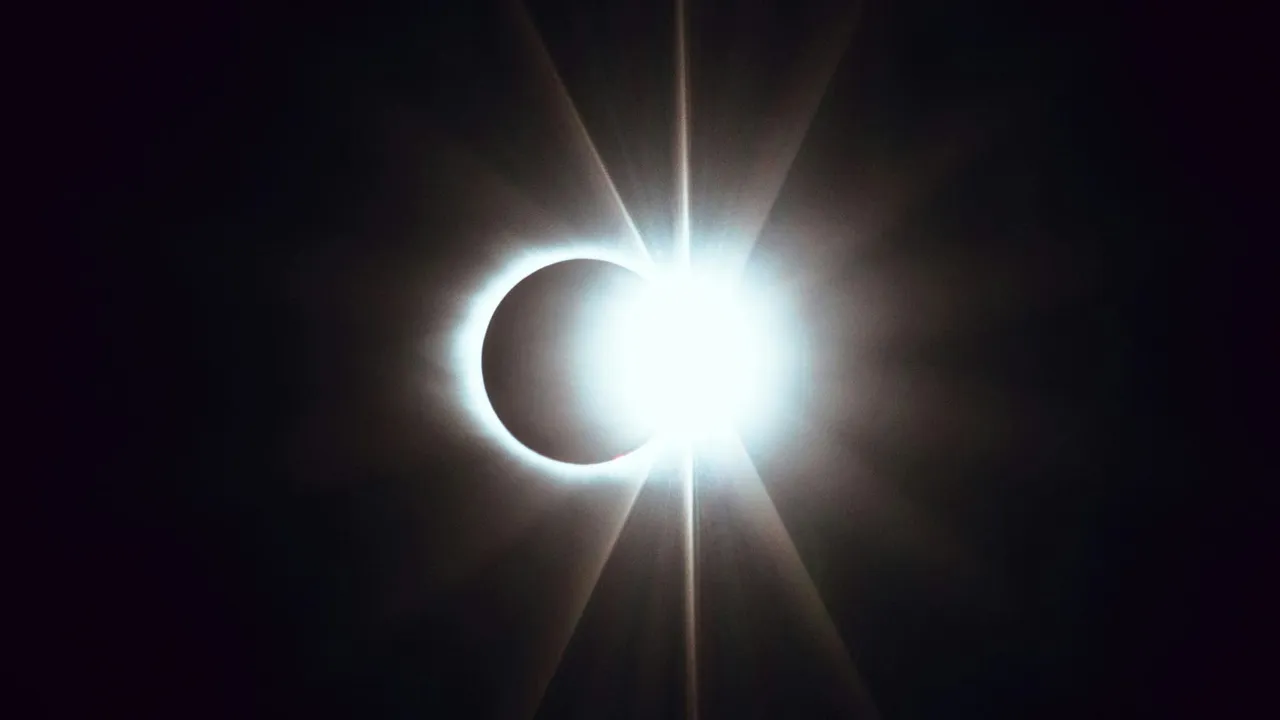
Upon both injection and departure, there is a blinding flash over The Anomaly’s local surface in many electromagnetic spectra. It is not wise to look directly at an FTL transition. Mass-energy from the cosmic string that created The Anomaly leaks into normal space on a departure as well, where it soon dissipates and becomes harmless. Scientists have found that this phenomenon helps account for the energy reduction that eventually evaporates all hyperlanes.
A Road to the Stars
The pragmatic ramifications of hyperlanes became public knowledge by 92 CY. A flurry of activity ensued. Corporate interests retooled factories to produce experimental hyperspace modules and the computer systems required for a safe transition in and out of a hyperlane. Public agencies and their corporate contractors sent new unmanned probes—now properly protected against gravito-electromagnetic shear—to nearby star systems and began drafting plans for interstellar colonies using the returned data. The Bary’s economy boomed. Still, The Bary’s governments were unusually circumspect about such a boon. Naval and orbital guard blockades were put in place to keep private citizens from attempting to access Fahrid’s filaments until more could be known of their hazards.
But space, it is said, is a big place. Top-secret classifications, misinformation programs, and overbearing public safety schemes warning of “dangerous space weather” were bound to be ignored by the most daring and inquisitive space denizens.
In 94 CY, affluent Novani voidfarers Korbyn and Ishay Drax jointly proclaimed themselves to be the first humans in recorded memory to set foot on an exoplanet. Violating an international moratorium on attempts to enter hyperspace with unproven parts, they successfully injected into a hyperlane in deep space, well beyond the reach of any enforcement or interdiction.
With their yacht, the clumsily named Dagger of Destiny, the Drax couple reached the closest unitary star system at just over 4 light-years distant. Once there, they re-christened its only rocky body Solace (from its previous astrophysical designation “Daniyah b”). They built a cairn on its surface, took samples and video, explored for several hours, and returned in mundane fashion. They made the journey in 90 hours, round-trip.
Upon returning to The Bary, Korbyn and Ishay were apprehended, quarantined, and questioned by the Novani authorities. But they had planned for this stunt. With camera drones and third-party verification, they broadcasted their exploits at every stage they could. Further corroboration would come four years later, when the transmission from their destination system reached Maridea. The Drax couple were celebrated as heroes. Korbyn and Ishay would not remain criminals for long; not in the face of such achievement. They risked an unceremonious and certain death should any one thing go wrong aboard the Dagger of Destiny. Instead, through their recklessness, they had proven that safe faster-than-light travel would soon become trivial.
It is now 100 CY. The Hinterlands of deep space colonization have been established, and new Frontiers beyond await. Human beings stand on the precipice of a grand expansionist fever dream where riches undiscovered and mysteries untold surely await. And thanks to the eccentricities of FTL travel, it is likely smaller Outfits of intrepid voidfarers that will make the first leap, with flotillas of corporate interests trailing behind.
Suggested reading 🡒

Voidsuits Lore Primer
In the first of Stardust's lore primers for Voidfarers, Ashlee models her voidsuit while we discuss the finer points of life support in the vacuum.

Metrics & Time
Time travel is possible. You’re doing it right now. A background of timekeeping in The Bary.

Propulsion
How does one travel billions of kilometers? A big, effective, and barely controlled boom.